Aerial and underground fiber construction can both deliver reliable network infrastructure. The correct method depends on existing pathways, ownership, permitting, route conditions, schedule and long-term operating priorities. A useful comparison starts with the actual corridor rather than a general preference.
When aerial fiber construction fits
Aerial placement uses approved pole infrastructure and may include new cable installation, lashing or overlash on an existing support system. It can be practical when the pole route is continuous, attachments are authorized and make-ready conditions are understood.
Aerial work remains exposed to weather, vegetation, vehicle strikes and changes in pole condition. The design must address clearances, slack, transitions and attachment requirements. Crew planning should confirm whether the approved method uses climbing, lift equipment or a combination.
Key aerial planning inputs
- Pole ownership and attachment authorization
- Route footage, pole count and existing plant
- New strand, lash or overlash method
- Clearance, crossing and transition requirements
- Access method and crew equipment
See Brandstein Group aerial fiber construction crew capabilities for a scope-readiness overview.
When underground fiber construction fits
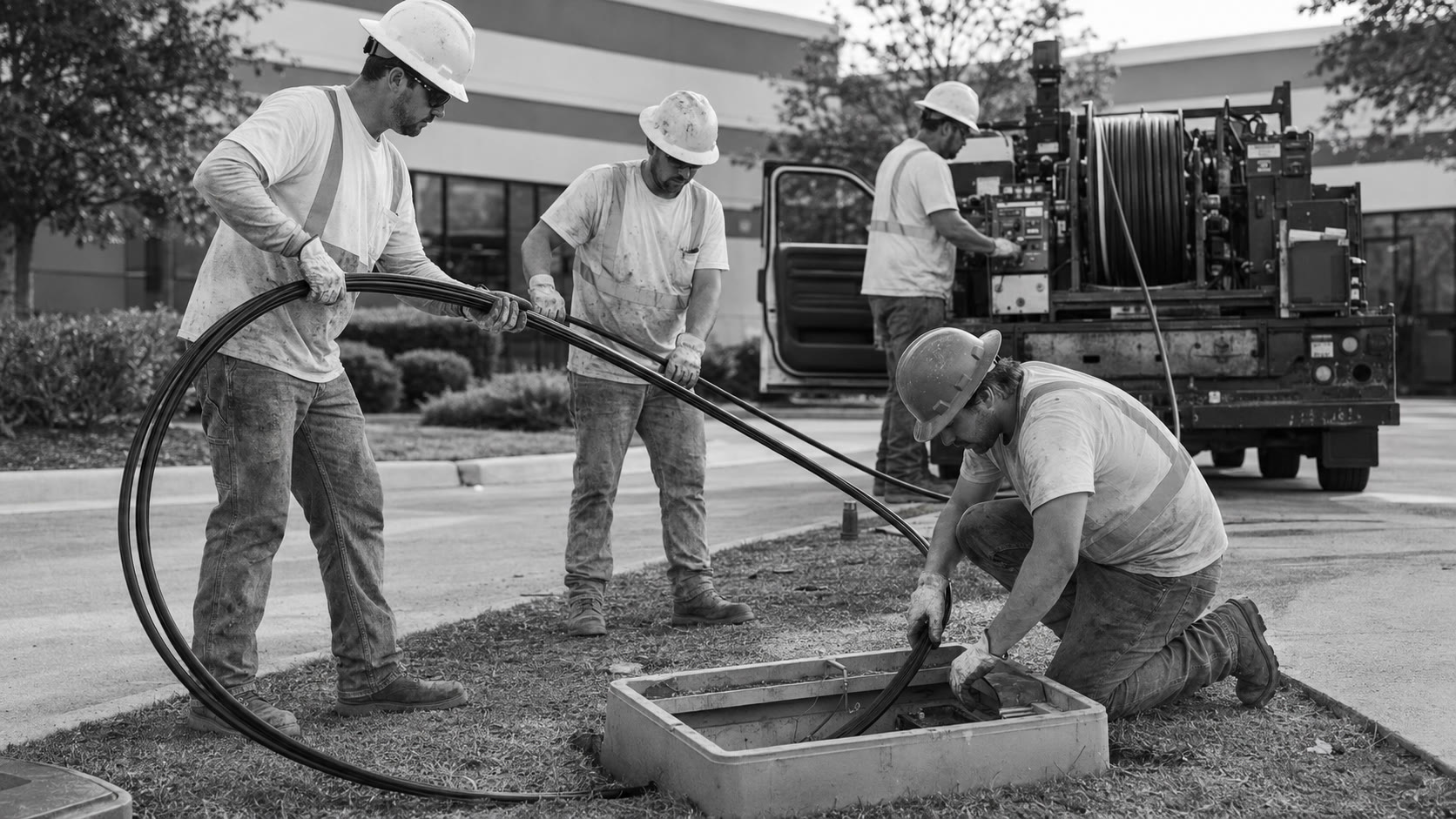
Underground placement routes fiber through conduit, microduct, handholes or other planned infrastructure. It can protect the cable from many above-ground hazards and reduce visual impact. The route's real value depends on pathway continuity and condition.
Existing conduit can shorten preparation time when it is accessible and suitable for the cable. Unknown occupancy, blocked sections, tight bends or damaged structures can change the placement plan. New civil construction adds permitting, locate, excavation, traffic and restoration requirements that should be separated clearly from cable placement responsibilities.
Compare schedule and production risk
Aerial construction may progress efficiently along an approved and accessible pole route, but make-ready delays or access restrictions can stop production. Underground placement can move predictably through prepared conduit, while unverified pathway conditions can create immediate downtime.
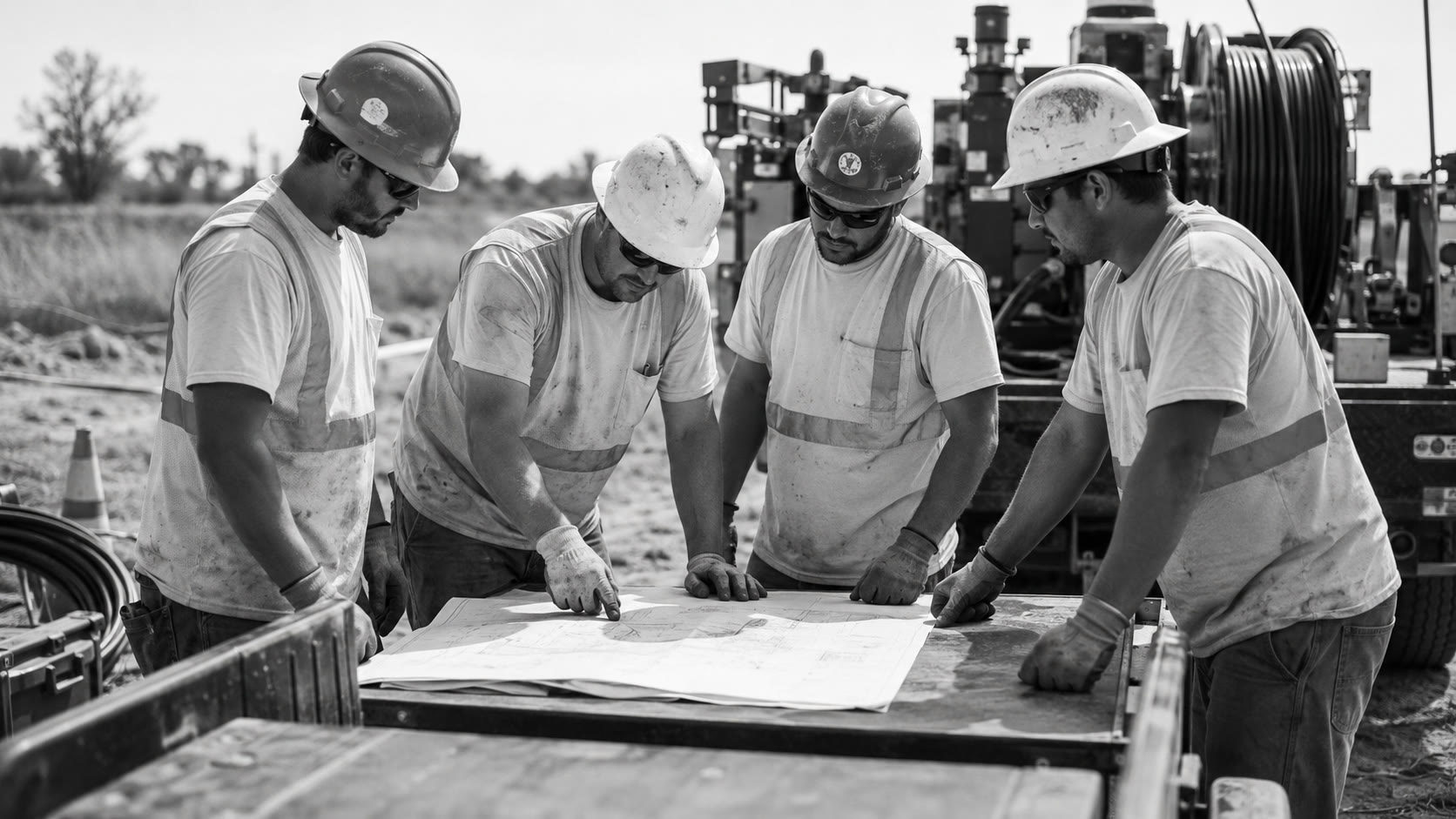
Do not compare crew production numbers without comparing route readiness. A realistic schedule accounts for permitting, material staging, civil work, pole or conduit corrections, traffic coordination, weather and closeout. The construction crew should receive a route package that identifies known exceptions.
Compare equipment and crew skills
Aerial construction requires personnel and equipment suited to pole-line work. The scope may call for climbing with gaffs, cable-handling equipment, lashers or other approved tools. Underground placement requires reel control, pulling equipment, pathway access tools and crew coordination across pull points.
If a project includes both methods, divide the route into measurable segments and identify transitions. A crew capable of multiple scopes can reduce handoffs, but equipment and production assumptions still need to be set for each segment.
Compare long-term access and maintenance
Aerial routes are visible and can be accessed without excavation, but they remain exposed to external damage. Underground routes are physically protected but may be harder to inspect when records are incomplete. Accurate route maps, cable identification, slack documentation and field photographs improve maintenance for either method.
Make the decision with route evidence
The most defensible choice combines engineering requirements, available infrastructure, permissions, construction cost, schedule risk and expected maintenance. In many programs, the answer is mixed: underground placement through one corridor, an aerial section across another and protected transitions at each end.
Once the design is approved, crew selection should match the construction package. Provide quantities, route conditions, expected method, equipment responsibilities and acceptance criteria before asking for a mobilization commitment.
Need crews for either route?
Brandstein Group supports aerial and underground fiber construction projects across the United States.
Review construction capabilities